A tiny NASA space observatory built to snap unprecedented view of the sun has captured its first video of a violent eruption of super-hot solar plasma from the surface of Earth's parent star.
NASA's sun-watching IRIS spacecraft spotted the solar eruption, called a coronal mass ejection (CME), surging off the sun on May 9. Video footage from IRIS shows the amazing explosion with a stream of charged particles and hot plasma spewing from the sun at speeds up to 1.5 million mph (2.4 million km/h). Read More
Showing posts with label Hottest and Coldest. Show all posts
Showing posts with label Hottest and Coldest. Show all posts
Wednesday, 4 June 2014

Wednesday, 30 April 2014
The Largest Hot Desert Fact 24
The Sahara Desert in North Africa is big - very big. It covers a third of the whole continent, measuring 8.6 million square kilometers - it is almost the same size as the USA! It's the largest hot desert in the world. The highest temperature ever recorded there was 58 Degrees Celsius. In a single day, the temperature can range from below freezing (0 Degrees Celsius) to 50 Degrees Celsius. These extremes of hot and cold, combined with the dry, dusty winds, make the Sahara a place where few plants and animals can survive.
The Sahara is a very hot place indeed, but it isn't the heat that makes it qualify as a desert. It is the lack of the rain. The average rainfall in Sahara is less than 8 centimeters a year (London's average rainfall is about 60 centimeters).

The Sahara is a very hot place indeed, but it isn't the heat that makes it qualify as a desert. It is the lack of the rain. The average rainfall in Sahara is less than 8 centimeters a year (London's average rainfall is about 60 centimeters).
Saturday, 19 April 2014
The coldest natural temperature Fact 14
The coldest temperature ever recorded on Earth was -89 Degrees Celsius at a science laboratory called Vostok Station in Antarctica, on 21st July, 1983. The temperature there reaches its lowest during the winter months of July and August, when it is dark even during the day!

Thursday, 17 April 2014
The hottest natural temperature Fact 11
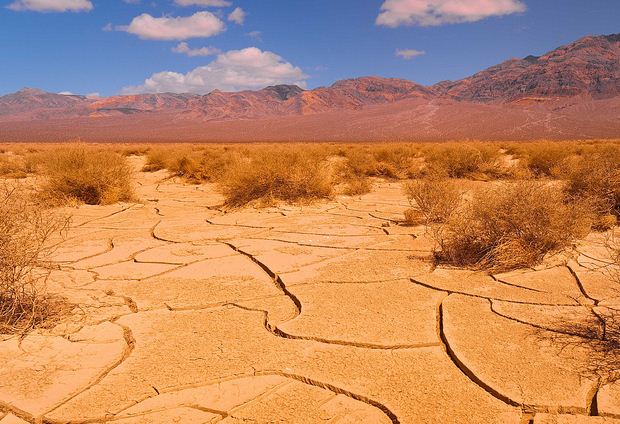 The hottest natural temperature ever recorded on Earth was in El Azizia, Libya 13th of September 1922. The temperature reached 58 Degrees Celsius. Scorching desert winds called the Ghibli can raise temperatures in this part of the world by 40 to 50 Degrees Celsius in the space of a few hours!
Wednesday, 16 April 2014
Highest man-made temperature Fact 09
 In 2005, scientists in a laboratory in Albuquerque, New Mexico, USA, produced plasmas (super heated gasses) who's temperature exceeded 2 billion Degrees Celsius! This is incredible when you consider the Sun's interior is only about 15 million Degrees Celcius.
The scientists couldn't believe what had happened, so they repeated the experiment over and over again. The result was the same each time. The experiment took place in the Z-machine, which is the largest X-ray generator in the world. The Z-machine tests materials under extreme heat and pressure, such as those in Nuclear explosions.
Subscribe to:
Posts (Atom)